 Skip to content
Bhitarkanika National Park: Home to the World’s Largest White Crocodiles
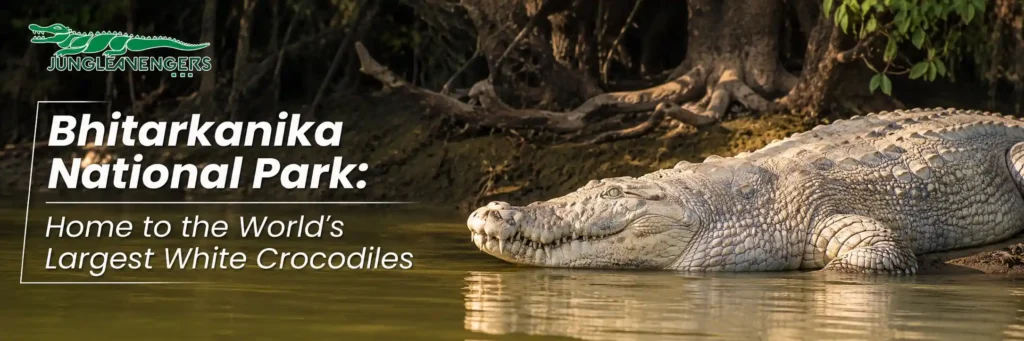
Located in the Kendrapara district of Odisha, Bhitarkanika National Park is one of the most biodiverse wildlife sanctuaries of India. Featuring the country’s second-largest mangrove ecosystem, it is also known as the “Mini Amazon of India”.
Home to countless species of reptiles, birds, and mammals, Bhitarkanika attracts wildlife enthusiasts, photographers, birdwatchers, and nature lovers from across the world. However, its thriving population of estuarine crocodiles, Guinness World Records’ largest crocodiles, and rare albino crocodiles holds most fascination globally.
Bhitarkanika Crocodiles: Return of the Wild
Did you know?
Presently renowned as India’s crocodile kingdom, Bhitarkanika was down to only 95 last surviving crocodiles. Due to unregulated hunting, poaching, and inhospitable surroundings, the population of saltwater crocodiles was on the brink of extinction. Fortunately, following the steps of the Wildlife Protection Act (1972), the Government of India and the United Nations (UNDP/FAO) partnered to launch the Crocodile Conservation Project in 1975.
Under this initiative, in April 1975, the entire 672 sq km of the Bhitarkanika mangrove ecosystem was secured and officially declared a Wildlife Sanctuary. Crocodile hunting was banned, and the Crocodile Conservation Act was launched. Furthermore, breeding camps were set in Dangamal and Trikarpada. Odisha soon, under the guidance of herpetologist Dr. H.R. Bustard, employed a new scientific approach, a “rear and release”, where eggs were collected from the wild, incubated in the specialised centers. Once the eggs hatched, they were then raised in protected pools, and once they attained the safe size of 1 to 1.2 meters in length, they were released back into the wild.
Due to the combined protective efforts and habitat restoration efforts over the decade, the once critically low population of crocodiles in the Bhitarkanika crocodile breeding park has reached over 1850 today. Making this the case of one of India’s greatest wildlife conservation success stories.
Bhitarkanika’s Largest Crocodile in India
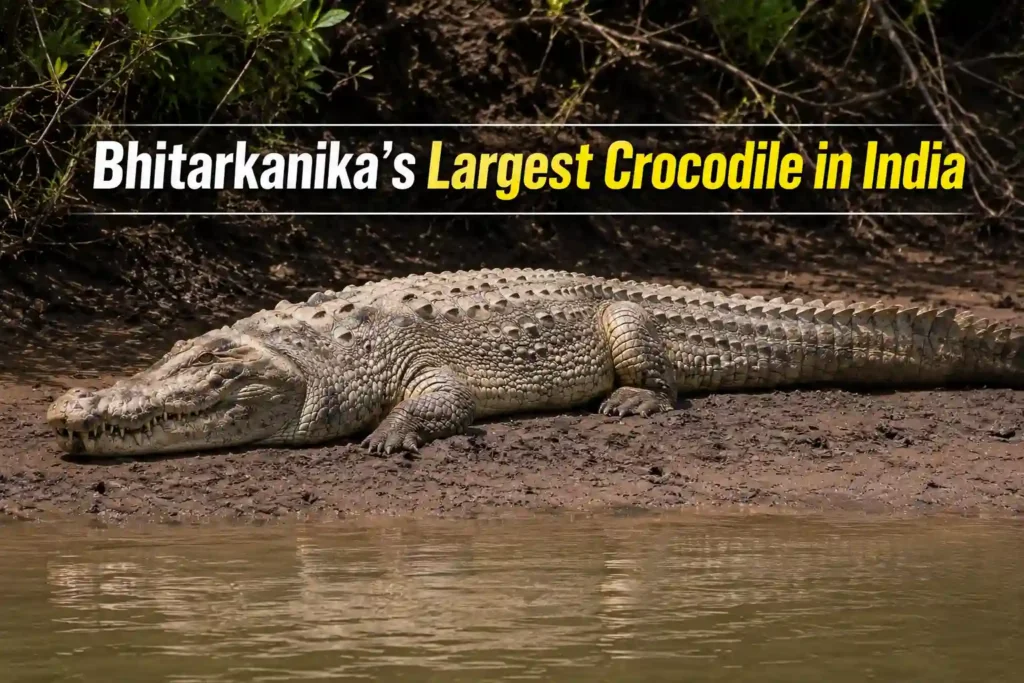
Bhitarkanika is the only state in India to house all three native species: the saltwater crocodile, the Mugger crocodile, and the Gharial. Not only this, over the years, the park has recorded several giant estuarine crocodiles. It is also one of the only places in the world where 10% male crocodiles can exceed upto 20 feet (6 meters) in length.
Bhitarkanika is widely famous for holding the claim over a massive 23-foot (7.1 meter) estuarine crocodile, as one of the largest crocodiles in the world, previously in the Guinness Book of World Records. Kalia and Mahisasur are the two most famous crocodiles of Bhatarkanika, known for their colossal size, cited between 17 and 20 feet.
The nutrient-rich waterways and protected habitat provide ideal conditions for these apex predators to thrive.
The Legend of The White Crocodile in Bhitarkanika
Bhatarkanika is like a mine of rare findings. As if harbouring the largest crocodiles in India wasn’t enough, Bhatarkanika Wildlife Sanctuary is also home to the world’s largest white crocodile.
These rare albino crocodiles are among the few of their kind found anywhere in the world. The most famous among them is Gori, an albino crocodile born in 1975 as part of the park’s crocodile conservation initiative. Over the decades, Gori became a symbol of Bhitarkanika’s conservation success and one of the park’s most recognized residents.
Later, other white crocodiles such as Malli and Sweta were added to the park’s growing list of rare albino reptiles. Bhitarkanika remains India’s only known habitat with a notable population of albino estuarine crocodiles.
Albino crocodiles develop their white appearance because of a genetic condition that affects pigmentation. Their striking pale skin makes them incredibly rare in the wild, as the lack of camouflage often reduces survival chances.
Wildlife researchers have recorded multiple albino crocodiles within the Bhitarkanika ecosystem, making it one of the most important locations globally for studying these extraordinary reptiles. Recent reptile censuses have documented numerous albino crocodiles within the park’s waterways and conservation areas.
Bhitarkanika National Park: Beyond Crocodiles
Sure, Bhitarkanika is famous for its crocodiles, but there is so much more to this Wildlife Sanctuary than these colossal specimens. Along with its rare albino saltwater crocodiles, the largest population of estuarine crocodiles, Bhitarkanika is also famous for :
- Olive Ridley Sea Turtles
- More than 300 bird species and migratory species
- Bagagahan Heronry
- Rare Reptiles and Amphibians
- Aquatic wildlife
- Diverse marine and estuarine ecosystems
- Rich mangrove vegetation
- Scenic boat safaris through winding creeks
Its unique combination of mangroves, rivers, mudflats, and forests creates an ecosystem unlike any other in India, earning it the recognition as one of India’s most important coastal wildlife habitats
Enjoy the Bhitarkanika Nature Camp
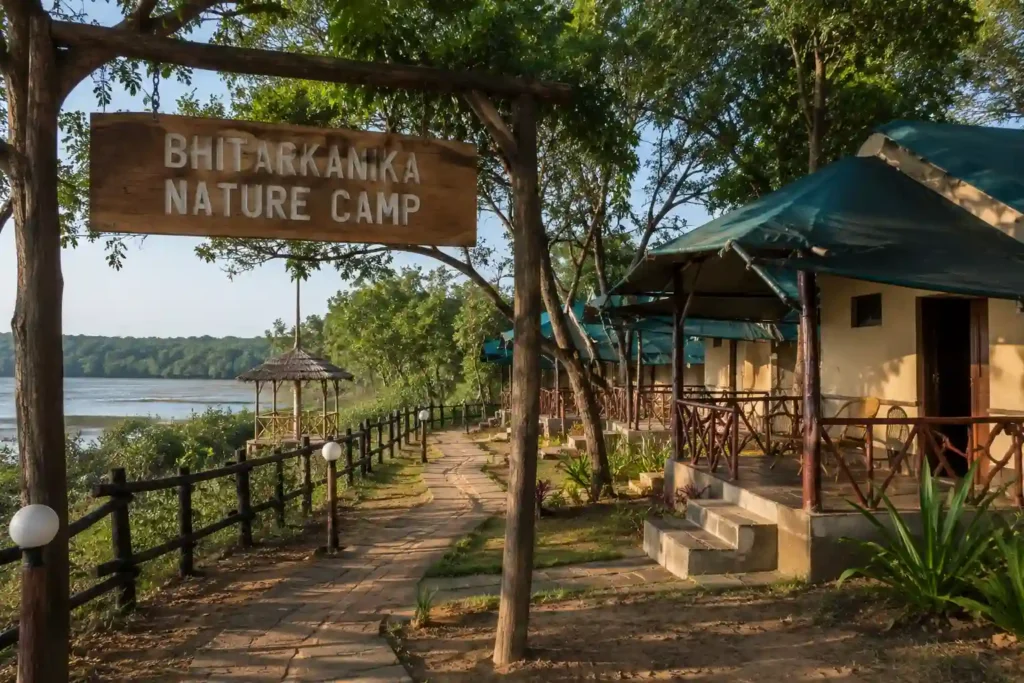
Organised by the government of Odisha Forest Department in Collaboration with Odisha Tourism, Bhitarkanika Nature Camps are an excellent way to experience the lush greenery of Bhitarkanika Wildlife Sanctuary and its diverse wildlife.
Organised by the state under an eco-tourism initiative, Bhitarkanika Nature Camp allows you to:
- Mangrove Creek safari
- Wildlife & Birdlife Sighting
- Visit pristine Beaches
- Explore Local Village life and its culture
- Visit the famous heritage sites, including the historic Shiv temple, and the scenic Lotus Pond
- Stargazing camps with evening bonfires
Experience Bhitarkanika With Jungle Avengers Resort
Spread across 4 acres within a lush 12-acre expanse, Jungle Avengers Resort is a hidden gem in Bhitarkanika, Kendrapara, Odisha. Our premium eco-resort is your gateway to the untouched wilderness of Bhitarkanika National Park. Experience the wildness of Bhitarkanika with the comfort of our luxury resort. Wake up to rare bird calls, witness the lush mangrove forests, winding rivers, and exotic wildlife up close, enjoy thrilling boat safaris, and immerse yourself completely in nature’s beauty.
Best Time to Visit Bhitarkanika National Park
Every year, the Bhitarkanika crocodile breeding park is closed to tourists from May 1 to July 31. This three-month restriction is enforced to support crocodiles’ peak breeding time.
The best time to visit the Bhitarkanika Wildlife Sanctuary is between October and March due to the comfortable temperatures and increased possibilities of frequent wildlife sightings.
During winter, migratory birds arrive in large numbers, making the park particularly attractive for birdwatchers and photographers. Visitors should note that certain areas may remain closed during crocodile nesting and breeding seasons to protect wildlife.
Final Thoughts
Bhitarkanika National Park is far more than a crocodile destination. It is a living example of successful wildlife conservation, home to rare white crocodiles, giant estuarine crocodiles, thriving mangrove forests, and remarkable biodiversity.
Whether you’re fascinated by the legendary Bhitarkanika white crocodile, interested in visiting a renowned crocodile breeding park, or simply looking to experience one of India’s most unique wilderness areas, Bhitarkanika offers an unforgettable journey into the wild. Its blend of conservation success, natural beauty, and extraordinary wildlife makes it one of Odisha’s most remarkable treasures.
Travelers seeking deeper insights into the region and planning nature-based experiences often explore resources from Jungle Avengers, which highlight the park’s ecological significance and the unique experiences that make Bhitarkanika so special.
FAQs
1. Why is Bhitarkanika National Park famous?
Bhitarkanika National Park is renowned for its vast mangrove forests, rich biodiversity, migratory birds, and, most importantly, for housing India’s largest population of estuarine crocodiles.
2. Is there a white crocodile in Bhitarkanika National Park?
Yes. Bhitarkanika is home to some of the world’s rarest and largest albino crocodiles, including the famous white crocodile named Gori.
3. What is the largest crocodile found in Bhitarkanika?
Bhitarkanika has been home to several colossal estuarine crocodiles over the years. However, it is globally famous for its massive 23-foot saltwater crocodile, as previously recognised by Guisness Book of World Records among the largest crocodiles ever documented.
4. What is the best time to visit Bhitarkanika National Park?
The best time to visit Bhitarkanika National Park is from October to March when the weather is pleasant, and wildlife sightings are more frequent. The park remains closed to tourists from May 1 to July 31 during the crocodile breeding season.
5. What wildlife can be seen in Bhitarkanika besides crocodiles?
Apart from crocodiles, visitors can spot Olive Ridley sea turtles, over 300 species of resident and migratory birds, king cobras, water monitor lizards, spotted deer, wild boars, otters, and a variety of aquatic and mangrove-dependent wildlife species.
Tagged: Bhitarkanika national park, Bhitarkanika National Park Crocodile, Resort in bhitarkanika, Bhitarkanika forest rest house, Bhitarkanika Mangroves, Bhitarkanika hotels, Mangrove Forest in India, Bhitarkanika Tour Package, Eco Resort Odisha, Bhitarkanika Tiger Reserve