
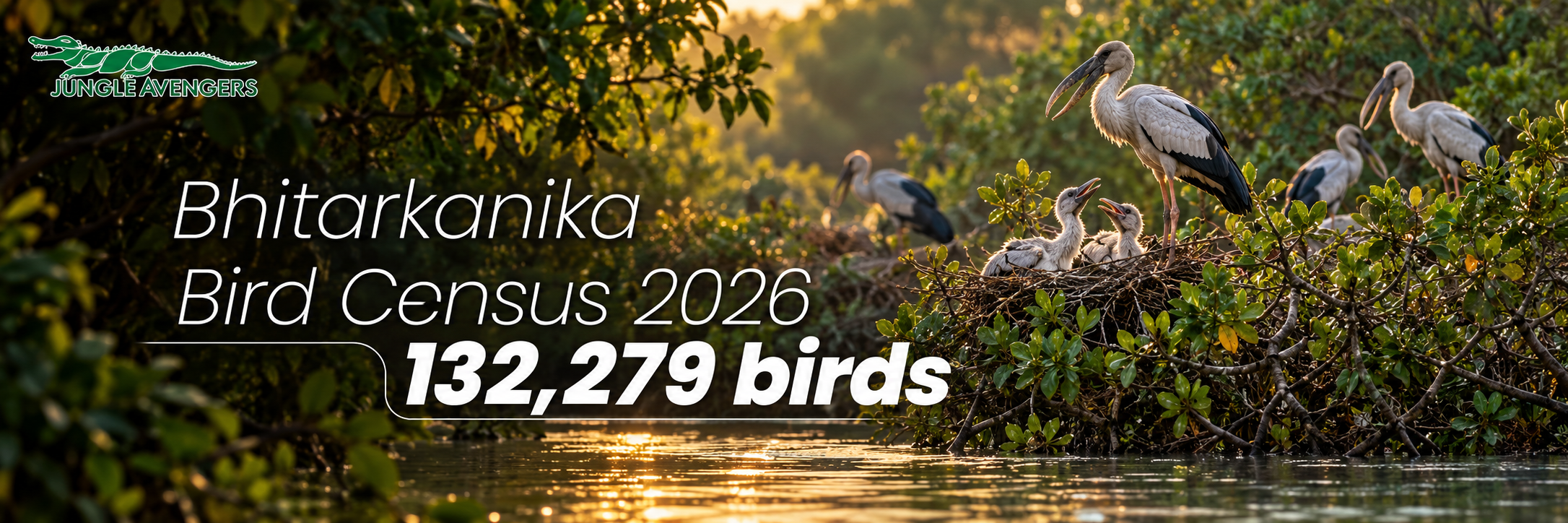
Bhitarkanika Bird Census 2026: Over 1.32 Lakh Birds Make the Mangroves Their Home
The results are out, and they make for fascinating reading, coming from the heart of Odisha’s wetlands. The Bhitarkanika Bird Census 2026 has recorded 1,32,279 birds in the state’s bird conservation park. This marks an increase from the 1,30,796 birds that were counted in 2025. For birdwatchers who have witnessed dozens of herons taking off from a mangrove forest while on a boat, this is a clear indication. Bhitarkanika is one of India’s most crucial breeding grounds for colonial water birds.
Conducted by the Rajnagar Forest Division, the Bhitarkanika Bird Census 2026 is an annual bird count. It is more than merely an exercise in tallying numbers.It is an indication of the region’s ecological health. This year’s census finds that the local mangrove forest continues to provide habitat and sustenance for the feathered residents.
What the Bhitarkanika Bird Census 2026 Found
The latest Bhitarkanika Bird Census 2026 gives a positive picture about the status of the park’s mangroves. During the three-day survey, forest officials found a large number of nesting birds of 10 species and 76,151chicks in the region. This suggests good breeding conditions in the area. According to the report, Bhitarkanika has a high bird density, with thousands of nests in significant breeding locations.
| Census Record | 2026 Findings |
| Total bird species recorded | 10 |
| Total birds recorded | 1,32,279 |
| Chicks recorded | 76,151 |
| Nests documented | 28,064 |
| Trees with nests | 1,419 |
| Major nesting locations | Mathadia, Laxmiprasaddia, Durgaprasaddia & Balidia |
| Dominant species | Asian Open-billed Stork |
| Asian Open-billed Storks | 78,925 |
| Asian Open-billed Stork nests | 16,111 |
Note: The census recorded 28,064 nests; the figure of 2,864 sometimes appearing in references is a typographical error.
The Asian Open-billed Stork dominated the Bhitarkanika Bird Census 2026 with 78,925 birds and 16,111 nests. Nine more bird species were found in the census, demonstrating the diversity of Bhitarkanika National Park’s birdlife. Mathadia, Laxmiprasaddia, Durgaprasaddia, and Balidia are good mangrove woods that attract many Bhitarkanika birds for nesting and breeding. The number of chicks in Bhitarkanika suggests favorable nesting grounds for bird watching in Odisha.
Why Bhitarkanika Keeps Attracting Birds Year After Year
The rich coastal habitat in Bhitarkanika is famous for having mangroves, water bodies, and an abundance of food. This has made it a paradise for water birds. The dense vegetation along with the waterlogged regions offer nesting sites. The wetlands provide them with plenty of food and a safe environment to breed. Some important reasons why wildlife in Bhitarkanika keeps doing well are:
- Dense mangrove forests: The thick mangroves offer cover and safe breeding sites for enormous colonies of birds.
- Creeks and tidal channels: The waterbird feeding and nesting environment is suitable in the waterway network.
- Abundant food: Birds rely on fish and other aquatic life as a stable food source, particularly during the mating season.
- Suitable climate: The moist habitat and seasonal availability of water support a diversity of bird species.
- Relatively undisturbed nesting areas: Mangrove-covered islands and natural forest patches offer safer nesting and breeding grounds for birds.
The timing of the Bhitarkanika Bird Census 2026 is very crucial. The survey is carried out throughout the monsoon and post-monsoon breeding season when resident colonial roosters converge in great numbers.
Bhitarkanika monsoon birds such as storks, herons and egrets use mangroves as breeding grounds during this season. Large colonies had established themselves, according to the census, but their arrival was allegedly a little late this year, owing to irregular rainfall.
These natural features together clarify why Bhitarkanika persists to attract large numbers of birds year after year. It remains an essential location for Bhitarkanika wildlife viewing.
A Closer Look at the Numbers
The Bhitarkanika Bird Census 2026 shows that there are a few more birds in the park than there were the year before. The number of birds grew by 1,483, which suggests that the population of birds that nest stayed mostly the same. The count gives useful information about nests, chicks, and individual species, not just the total number. Key census findings include:
- Increase in bird numbers: The previous census had 1,483 fewer birds than Bhitarkanika.
- Breeding activity: Chick count indicates nesting and breeding success.
- Nest distribution: A list of nests in various trees and places helps identify key areas for breeding.
- Species information: Authorities can learn more about the park’s bird diversity by looking at which species are most common.
- Habitat protection: Conservation teams can use nesting trends to find places that need to be watched over and protected over time.
- Teamwork in the field: Bird experts, forest workers, and local volunteers all helped with the census. They brought together professional knowledge and knowledge of the area from the volunteers’own experiences.
The Bhitarkanika Bird Census 2026’s detailed findings go beyond a bird count. The data can assist forest officials in tracking breeding patterns, analyzing ecological conditions, and preserving Bhitarkanika wildlife.
Why Bird Watchers Should Take Notice
The Bhitarkanika Bird Census 2026 makes Bhitarkanika Island a fascinating location for bird lovers, nature photographers and wildlife enthusiasts. Its extensive bird variety and beautiful mangrove waterways provide a wonderful experience for visitors. Here are reasons why bird watchers should take notice:
- Unique birdwatching opportunities: See Asian Open-billed Storks, herons, darters and egrets in their natural habitat
- Diverse bird species: Bhitarkanika National Park birds are resident and migratory and therefore, offer an exceptional opportunity for year-round birdwatching activities.
- Scenic Boating Safaris: These involve traversing mangrove streams to spot birds, saltwater crocodiles and other wildlife.
- Birdwatching in Odisha: Offering a unique birdwatching experience amidst mangroves, marshes and coastal waters around Chilika Lake.
- Wildlife: Apart from Bhitarkanika birdwatching, you can also learn about coastal Olive Ridley turtle conservation and other wildlife.
How the Census Will Shape Bhitarkanika National Park 2026
The census results from this year will likely affect how the forest service runs Bhitarkanika National Park 2026 onward. Regular checks like these help the government figure out which heronries need more protection. They also help determine whether people should be able to do as much near nesting sites. They also help determine how weather trends like later monsoons might be changing breeding schedules in the coming years.
The stable bird population reflects well for Bhitarkanika visitors. The boat safaris and facilitated birding tours through the park’s waterways are likely to continue delivering great observations of birds in Bhitarkanika. This is especially true during the breeding season when the heronries are at their most active and loudest. Anyone planning to take a trip around this period should expect to see one of the most intense gatherings of colonial water birds. This phenomenon is encountered anywhere in eastern India.
Conclusion
The Bhitarkanika Bird Census 2026 shows that this mangrove wilderness still provides a secure, productive home for birds. These birds need natural wetlands to exist and nest. Many aquatic ecosystems are dwindling in their numbers across the nation. However, Bhitarkanika is growing steadily and modestly, which is something to be proud of.
The history of the park shows that conservation measures, careful monitoring, and minimum human interference can make a real difference. These efforts have proven beneficial for the Bhitarkanika wildlife as a whole. The statistics speak for themselves. More than 1.32 lakh birds have selected these mangroves as their breeding habitat this year. With continued conservation efforts, there is every likelihood that they will come again.
If this story inspires you to come and see those storks and herons fill the sky, then Jungle Avengers Resort is the perfect place to visit. You can rest and take it all in. The location of this resort is on the edge of Bhitarkanika National Park; it offers comfortable accommodations.
It provides guided boating and easy access to the park’s heronries and outlying wetlands. It is a fantastic location to rest after a day in the mangroves and their flying inhabitants. If you are planning a calm family vacation or a birding expedition, Jungle Avengers will take you closer to the wild. You can enjoy this experience without compromising on comfort.
Frequently Asked Questions
1. What is the Bhitarkanika Bird Census 2026?
Rajnagar Forest Division conducts the Bhitarkanika Bird Census 2026 annually to count nesting birds and monitor population in the National Park.
2. How many birds were recorded in Bhitarkanika in 2026?
The census recorded 1,32,279 birds, an increase of 1,483 birds compared with the 1,30,796 recorded in 2025.
3. Which bird species was the most common in the 2026 census?
The Asian Open-billed Stork was the dominant species, with 78,925 birds and 16,111 nests recorded.
4. How many bird species were recorded in the Bhitarkanika Bird Census 2026?
The census recorded 10 colonial nesting bird species, including Asian Open-billed Storks, herons, egrets, ibises, cormorants and darters.
5. How many nests and chicks were recorded in 2026?
The survey documented 28,064 nests across 1,419 trees and recorded 76,151 chicks.
6. Why is Bhitarkanika a popular destination for birdwatching?
Bhitarkanika offers dense mangroves, tidal creeks, wetlands and abundant food resources, providing excellent habitats for resident and migratory birds.
7. What is the best time for Bhitarkanika bird watching?
The monsoon and post-monsoon seasons are important for observing nesting colonies, while November to February is popular for spotting migratory birds.
8. Which are the major bird nesting areas in Bhitarkanika?
Mathadia, Laxmiprasaddia, Durgaprasaddia and Balidia are important nesting and congregation sites for birds in Bhitarkanika.
9. Why is the Bhitarkanika Bird Census important for wildlife conservation?
The census helps forest officials monitor bird populations, breeding patterns and nesting habitats, supporting better protection of Bhitarkanika’s mangrove ecosystem.
10. Where can visitors stay while exploring Bhitarkanika National Park?
Jungle Avengers Resort offers comfortable accommodation, guided boating experiences and convenient access to Bhitarkanika’s mangroves, heronries and surrounding wetlands.
Also read : best-hotels-in-bhitarkanika , What is the cost of Bhitarkanika tour package? , Best Activities to Do in Bhitarkanika National Park , Top Reasons to Choose Jungle Avengers – A Nature Resort in Bhitarkanika, rooms-in-bhitarkanika, Bhitarkanika National Park: A Secret Paradise for Nature and Animals, The Best National Parks in India 2025: Nature’s Vast Wonders, Bhitarkanika Tour Package Guide for First-Time Visitors