
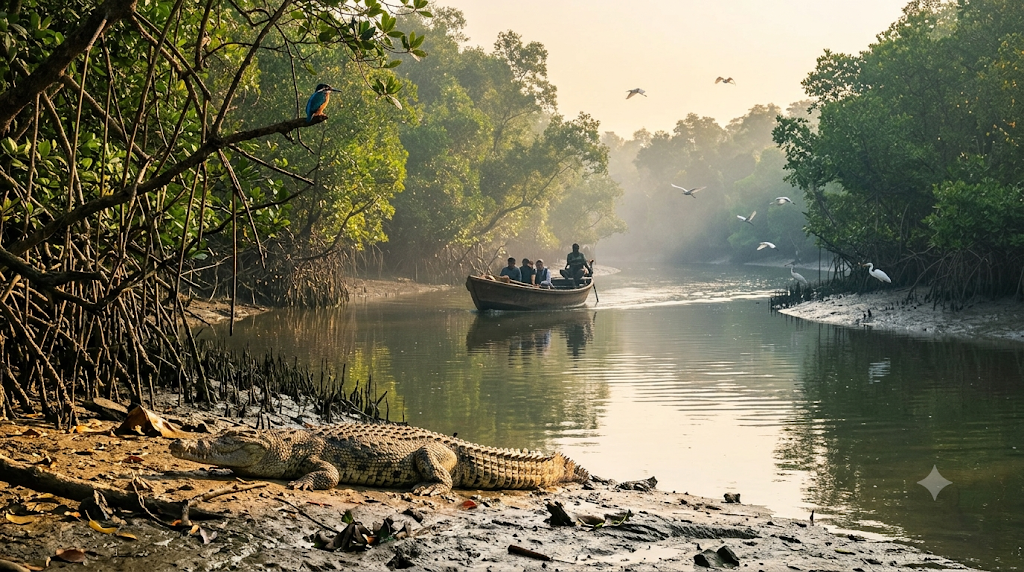
How to Plan a Bhitarkanika Trip During Winter
Ever thought about exploring mangrove forests, cruising through quiet waterways, spotting saltwater crocodiles, or even gazing at migratory birds… all in one trip?
Sounds fun & thrilling, right?
That’s what makes this exciting Bhitarkanika trip in winter worth planning!
Here, the cooler weather actually makes exploring even more comfortable. But when should you visit? What can you see? What should you pack? And where should you stay? We’ll get to know everything in this Bhitarkanika winter travel guide.
Let’s figure it all out before you start packing…
Bhitarkanika in December or January? Which Month Should You Pick?
Trying hard to decide between December and January? Actually… Both are good months for your Bhitarkanika trip in winter, but honestly, your experience will be a little different depending on when you visit.
December is genuinely a good pick if you want comfortable weather, while January will bring cooler mornings along with a chance to enjoy winter birdwatching.
Here’s what you should know before booking.
Bhitarkanika in December: Comfortable Days and Cool Evenings
December is a lovely time to explore Bhitarkanika without dealing with much heat. The days are generally pleasant for boat rides and sightseeing, while mornings and evenings can feel a little chilly.
You can also enjoy the winter birdlife around the mangroves.
What you can simply expect in December:
- Pleasant weather for boat rides
- Cool mornings and comfortable afternoons
- Good time for birdwatching
- Easier conditions for outdoor exploration
Bhitarkanika in January: Cooler Mornings and Winter Birdlife
Planning to visit Bhitarkanika in January? Expect colder early mornings, especially when you’re heading out for a boat ride. It’s also a good month for spotting all the unique migratory birds.
However, there’s one important thing to check before finalizing your dates.
The forest department may temporarily close for that annual crocodile census. The closure dates may vary as well, so make sure you check the latest official update before booking your stay or travel.
What you can simply expect in January:
- Colder mornings during boat rides
- Good opportunities for winter birdwatching
- Pleasant afternoons for sightseeing
- Possible closure for crocodile census
So, December or January? Here’s the Quick Comparison
| What matters | Bhitarkanika in December | Bhitarkanika in January |
|---|---|---|
| Weather | Pleasant and comfortable | Cooler, especially mornings |
| Early boat rides | Chilly but manageable | Colder mornings |
| Birdwatching | Winter birds arrive | Good winter birdwatching |
| Crocodile sightings | Possible during permitted safaris | Possible, subject to access and conditions |
| Travel comfort | Good for outdoor exploration | Good, but check closure dates |
Our suggestion: Choose December if you want a straightforward winter trip with comfortable weather.
January is also a great option, especially for birdwatching, but confirm the crocodile census closure dates first. And remember, wildlife sightings are never guaranteed, whichever month you choose.
What Can You Actually See and Do During a Bhitarkanika Trip in Winter?
So, what’s waiting for you beyond the boat ride? Quite a lot! From narrow mangrove creeks and giant saltwater crocodiles to winter birds and forest trails, along with quiet beaches… There’s plenty to explore.
Here are the experiences worth making time for during your Bhitarkanika winter travel.
Take a Boat Safari Through Mangrove Creeks
This is the experience you shouldn’t miss. Your boat takes you through narrow waterways, with mangrove trees lining both sides.
Keep looking at the muddy banks, tree branches and water. You never know what might appear along the way.
Don’t miss:
- Narrow creeks through dense mangroves
- Quiet boat rides through waterways
- Wildlife views along muddy banks
- Early morning birdwatching boat trips
Look Out for Giant Saltwater Crocodiles
Bhitarkanika is absolutely famous for its saltwater crocodiles, and the experience of spotting one basking on a muddy riverbank is quite something.
You may also see spotted deer and water monitors, along with other wildlife. But remember, sightings will totally depend on natural conditions and your luck.
Keep your eyes open for:
- Saltwater crocodiles basking along riverbanks
- Spotted deer near forest edges
- Water monitors around muddy banks
- Crocodiles resting close to water
Go Birdwatching for Winter Migratory Birds
Winter actually brings migratory birds to Bhitarkanika’s wetlands. This makes it a good time for birdwatching.
Here, you can watch for: Kingfishers. Herons. Egrets. Storks. And other waterbirds. You can also carry binoculars if you have them, especially when exploring these quieter creeks and wetland areas.
Birdwatching tips worth knowing:
- Carry binoculars for distant birds
- Watch quietly near wetland areas
- Look for kingfishers and herons
- Keep mornings free for birdwatching
Try Nature Photography Along the Way
Frankly… you don’t need to be a professional photographer to enjoy this. The mangrove roots, reflections, birds sitting on branches, crocodiles along the banks, these all offers plenty of photo opportunities.
Just keep your camera ready, but always follow your boat guide’s instructions.
Good photography opportunities include:
- Mangrove reflections across calm waterways
- Birds resting on tree branches
- Crocodiles basking along muddy banks
- Natural landscapes from your boat
Explore Dangmal’s Forest Attractions
Don’t make your trip only about the boat safari. At Dangmal, you can explore the crocodile breeding and conservation centre, visit the wildlife museum and walk along the mangrove trail.
These stops help you understand the forest beyond what you see from the boat.
Add these to your visit:
- Visit the crocodile conservation centre
- Explore the local wildlife museum
- Walk along the mangrove trail
- Learn about crocodile conservation efforts
Visit Nearby Beaches and Heritage Spots
Wow!! You have an extra day? You can also explore these places around Bhitarkanika, too…
Pentha Beach will give you a coastal break, while Killa Aali Palace will surely add a historical vibe. Gahirmatha is known for Olive Ridley turtles, but access and seasonal restrictions actually need checking.
Nearby places worth considering:
- Pentha Beach for coastal views
- Killa Aali Palace for history
- Gahirmatha for Olive Ridley turtles
- Paradip Beach for another outing
One thing to keep in mind: Don’t plan your entire trip around seeing a crocodile, spotting a particular bird or finding turtles. These are wild animals, not scheduled attractions.
Sightings will totally depend on the season, weather, tides, location as well as a bit of your luck.
Also, make sure you check forest permissions, boat availability, access restrictions before adding nearby spots to your itinerary.
Planning tip: Ask your boat operator which safari route runs during your visit and what attractions it includes. Different routes can offer different experiences, so confirm the stops before booking.
What Should You Pack for Bhitarkanika in Winter? Don’t Miss These!
Packing for a Bhitarkanika trip in winter isn’t complicated, but don’t forget that early morning boat rides can feel quite cold.
You’ll also spend time outdoors, so carry things that keep you comfortable during safaris and sightseeing. Here’s a quick checklist before you zip up your bag!
Your Bhitarkanika winter packing checklist:
- Light clothes for pleasant afternoons
- Warm jacket for early morning rides
- Comfortable shoes for short walks
- Sunscreen and sunglasses for daytime
- Insect repellent for outdoor activities
- Personal medicines and basic first-aid
- Camera and binoculars for wildlife
- Power bank for longer outings
- Reusable water bottle for hydration
- Cap or hat for sun protection
One small tip: Keep your jacket, water bottle, sunscreen and camera in an easy-to-reach day bag. You won’t want to unpack your entire suitcase before heading out for an early morning safari!
One Day or Two? Plan Your Winter Wildlife Trip Odisha Smartly
| Trip duration | What you can cover | Best for |
|---|---|---|
| 1 Day | Boat safari + Dangmal visit | Short trips |
| 2 Days / 1 Night | Boat safari + sightseeing + relaxed stay | First-time visitors |
| 3 Days / 2 Nights | Safari + forest attractions + nearby places | Slow exploration |
Quick travel tips:
- Start early: Reach your entry point on time.
- Entry points: Khola, Gupti or Jayanagar, depending on your route.
- Boat safari: Confirm timings and availability beforehand.
- Travel time: Bhubaneswar takes roughly 3–4 hours by road, depending on the entry point.
- Winter season: October to March is generally suitable. (Compare with Chilika if you’re still deciding your Odisha winter getaway.)
- January visits: Check temporary crocodile census closures before booking.
Our suggestion: Choose 2 days and 1 night if you want to enjoy the boat safari and explore Bhitarkanika without rushing.
Where to Stay During Your Bhitarkanika Winter Trip? Don’t Book at the Last Minute!
So, where are you staying? December and January get busy in Bhitarkanika, so it’s better to book early.
Check out Jungle Avengers Resort for your stay. Just ask them about available rooms, food, current rates, pickup, and boat safari arrangements before you make your plans.
Happy Exploring! Fun-Filled Bhitarkanika Trip…
FAQs About the Bhitarkanika Trip in Winter
Is winter a good time to visit Bhitarkanika?
Yes, it is. October to March is generally a good time for you if you want to experience boat safaris, birdwatching as well as exploring the mangroves.
How many days are simply enough for Bhitarkanika?
Two days and one night are perfect for you if you want to enjoy a boat safari plus explore nearby attractions.
Should I book my Bhitarkanika stay in advance?
Definitely, you can. December and January can get busy usually, so you can book your accommodation and check boat safari availability, all in advance.